Lecture 5.2
Vote Buying
Emmanuel Teitelbaum
Public Goods
What is a Public Good?
- Non-excludable: can’t restrict use once provided
- Non-rival (jointly supplied): once available, can be consumed by others at no additional cost
- Opposite of a private good, distinct from “club goods” and “common pool resources”
Examples
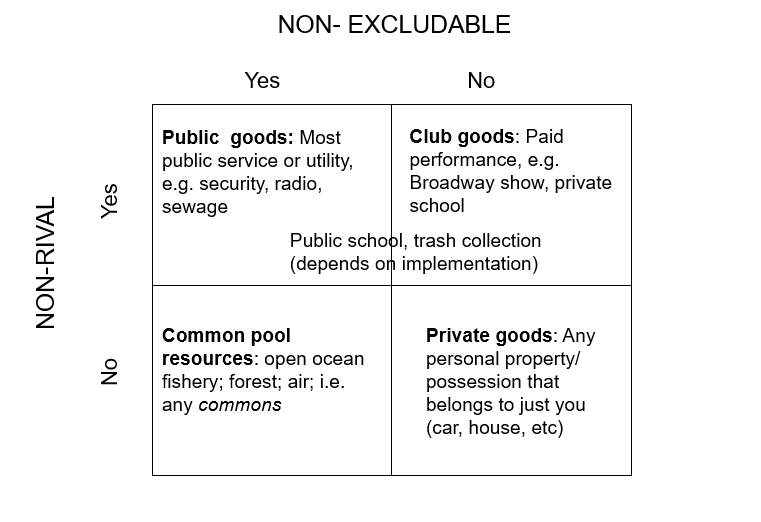
Relevance
- Public goods associated with programmatic politics
- Clientelism associated with club goods and private benefits
Geography of Clientelism
Vote Buying in Indonesia
Discussion
- What is a “success team”?
- How does clientelism in Indonesia differ from clientelism in Latin America?
- What changed in 1999?
- What is a “ground war” and how is it fought?
- What does “margin error” refer to?
- When is vote buying successful? What does it achieve?
Electoral Systems
Closed and Open-list PR
- PR versus SMD
- Closed-list PR (most systems)
- Party controls who is on list, and ranking of candidates
- Generates loyalty to party
- Open-list PR (Indonesia)
- Vote for individuals not parties
- Candidates with most votes get seats
Ballot Example

2014 DPR (People’s Representative Council) ballot for Bali. One punch for party and one for a candidate
Election Results
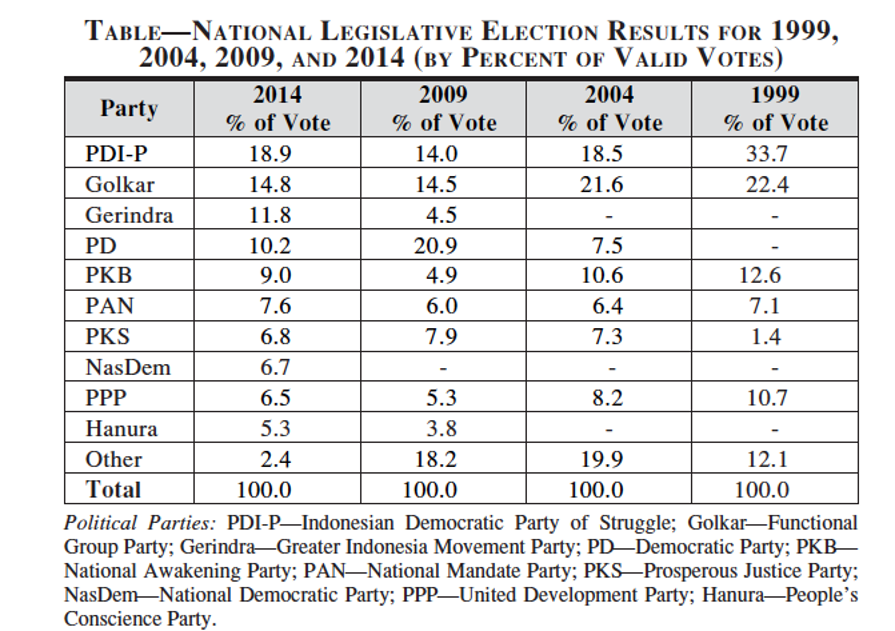
Source: Aspinall, 2014
Brokers
Tim Sukses
- “Success teams”
- Important due to general weakness of parties
- Hierarchical, pyramid-like structures
- Brokers are notoriously unreliable
- Predation, defection, duplicity
Effectiveness
- Base areas
- Tim sukses, vote buying more effective
- But required to stay relevant
- In non-base areas
- Community gifts and become more important
- Success depends on influence of community leaders
- Quid pro quo is expected but difficult to enforce
Comparisons
- Argentina
- India
- North vs. South
- Sub-Saharan Africa
- Similar variation
- Hypothesis: clientelism is stronger where parties are weaker
Exercise
- Bobby Nasution is running for governor of North Sumatra.
- You are his tim sukses (success team). How will you…
- Manage brokers?
- Decide where to focus your resources?
- Choose what types of gifts to give (individual vs. community)?
- Minimize “margin error”
- Prevent rivals from poaching your resources?
Welfare States in SE Asia
Welfare States in Developing Countries
- Noncontributory social assistance
- Direct transfers, frequently conditional
- Social insurance
- Protection against loss of employment
- Health care schemes
- Labor market policies
- Minimum wage, terms and conditions of work, resolution of industrial disputes, etc.
- Education spending
Southeast Asia Examples
- Malaysia
- Universal healthcare alongside private system
- Free primary and junior secondary education
- Thailand
- “30-bhat scheme”
- Free education through secondary school
- Indonesia
- Jaminan Kesehatan Nasional (JKN)
- Universal healthcare scheme introduced in 2014
- Covers > 200 million people, largest single payer scheme in the world (Augustina et. al. 2019)