Lecture 2.2
Modernization Theory
Emmanuel Teitelbaum
Measuring Wealth
GDP and GDP per Capita
- Gross Domestic Product (GDP)
- Total value of goods and services produced within a country
- GDP per capita
- GDP divided by total population
- Generally speaking, we use GDP per capita to measure wealth of individual countries
- Whereas GDP may be more of a measure of power or influence
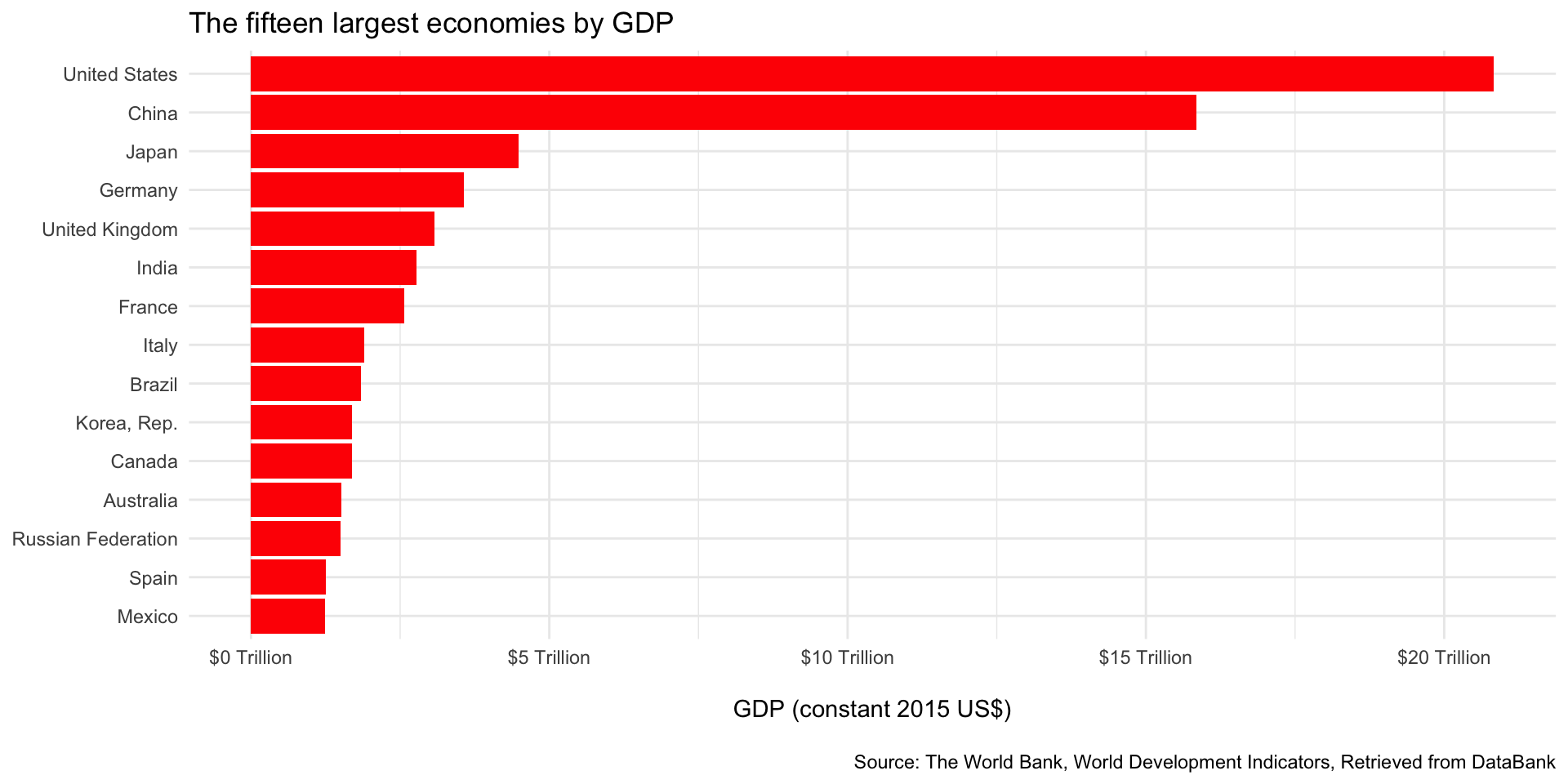
World’s Largest Economies
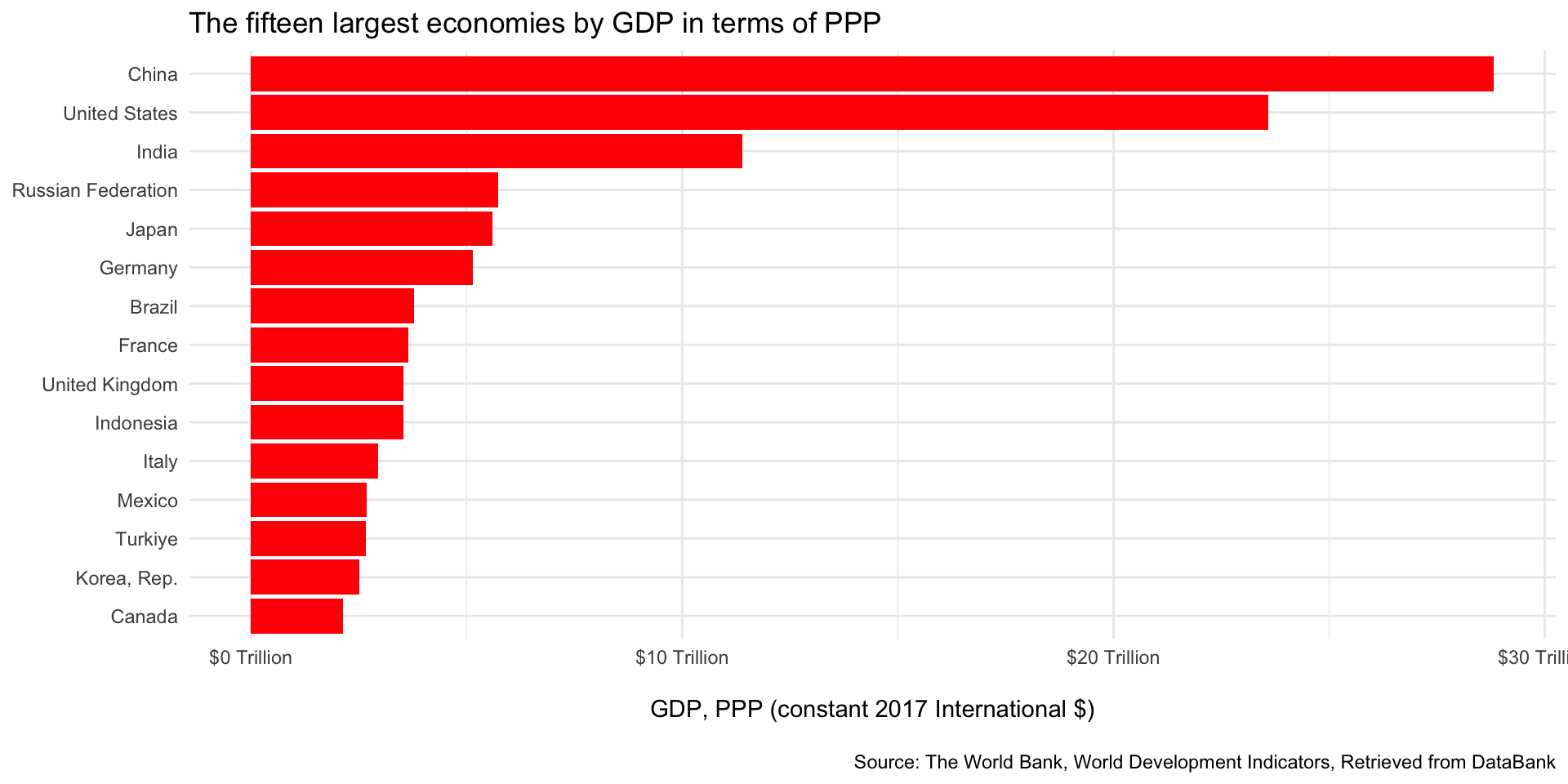
World’s Wealthiest Countries
Measuring Democracy
The V-Dem Institute
- Varieties of Democracy (V-Dem)
- Polyarchy score
- Robert Dahl
- Polyarch–form of government in which power is vested in multiple people
- V-Dem’s polyarch index is based on concept of electoral democracy
Polyarchy (Electoral Democracy)
Polyarchy: “seeks to embody the core value of making rulers responsive to citizens, achieved through electoral competition…[P]olitical and civil society organizations can operate freely, elections are clean..and affect the composition of the chief executive.”
Other V-Dem Indices
- Liberal: checks on executive power, rights protections, rule of law
- Participatory: citizen participation beyond elections
- Deliberative: reasoned public debate and justification
- Egalitarian: equal political access and influence
Most Democratic Countries (Polyarchy)

Modernization Theory
What is Modernization Theory?
- Based on observation by Lipset (1959)
- Noted that democracy is highly correlated with development
- Took on guise of causal argument
- Wealth → democaracy
Some Stylized Facts
- Wealthier countries tend to be more democratic
- Relationship tends to be stronger before WWII
- There also tend to be big regional differences
- In some regions the relationship is evident
- In others, not as much
Modernization Before 1945
Modernization in the Post-War Period
“Endogenous Democratization”
- Democracy is a direct consequence of economic development
- Przeworski’s term for modernization theory
- Endogenous–coming from within
- Democracy is a result of wealth
Proposed Mechanisms
- Industrialization
- Urbanization
- Rise of middle class
- Education
Exogenous Democratization
- Exogenous–resulting from an external cause
- Wealth does not cause democracy
- But democracy is more easily sustained in wealthy countries
- Przeworski’s argument against modernization theory
Democratic Survival and Income
“No democracy has ever fallen in a country with a per capita income higher than that of Argentina in 1975.”
— Adam Przeworski et al., Democracy and Development (2000)
Empirical threshold - ≈ $6,000 GDP per capita (1990 PPP dollars) - Above this level, democracies are observed to be ‘immortal’ in the data
Key point: income predicts democratic survival, not democratic transition
Breaking it Down
Democracy and Development by Region
Democracy and Development Over Time
Discussion
Three Theories
- Modernization; exogenous; and inclusive institutions (A&R)
- Sketch the causal arrow for each theory
- Choose a country (your favorite or from the list)
Possible cases (pick one): South Korea, Chile, Ghana, India, Singapore, Nigeria, Poland, Mexico, China
Discussion Prompts
- Which theory fits your case best? Which fits worst?
- What evidence would change your mind?
- Is it “deviant” relative to any theory?
- How does your case fit to the “universe” of cases?
- e.g. all of the countries for all of the years